This week didn't have one focus in particular, it was just a range of different tasks going on. WALK CYCLE
(Walk Cycle - Pass 1)
"When we were first presented with this task, I won't deny, I found it a bit daunting. While I've tried walk cycles before, they weren't necessarily great. They staggered and gave a very rough feel, and I worried my previous inexperience would hinder this attempt. Even when drawing out each frame, with a reliable reference on the screen at the front, I felt like when I line tested, it would turn out bad and I'd have to try again.
As mentioned, I followed along with the guide at the front. While I needed the reference for the contacts, passings and highs & lows, I felt confident enough with the inbetweens to do them myself. I would occasionally flick through my drawings, trying to get some semblance of just what it would look like in motion, I couldn't get a good idea of it.
Eventually, I managed to line test and I was extremely happy with the results! Where I had worried that the animation would look bad while drawing the frames, putting them all together brought out a smooth, convincing walk cycle!" (link to original post)
(Walk Cycle - Pass 2)
"Once the main walk cycle was complete, we moved onto getting the arms to move. We were only really given the first contact position to work with, alongside being advised that it's the same basic principle as the legs when it comes to how to position the other frames. I was much more confident with this step, since I have a better idea of how arms work than legs. I decided to offset the arms by one frame; for example, where the extreme for the legs would be frame 1, the arms' extreme would be frame 2. I figured this would make a less robotic movement, since it doesn't look like a deliberate effort to move both arms and legs at the same time. I'm happy with how the arm animation turned out, having the figure seem like they're doing a "happy march", for lack of a better term."(link to original post)
CHARACTER ARCHETYPES
For my original post on character archetypes, click here.
I'm confident discussing about the different archetypes found in the hero's journey in depth, and will definitely have to consciously remember them when creating my own stories.
VISITING LECTURER
For my original post and thoughts on Robert Morgan's lecture, click here.
Overall, I feel like this week went well! I didn't have any real experiences of panic or worries with what I was making or being taught, and I feel like I took everything in stride effectively. Going forward, I feel like the most important thing I learnt about this week was the walk cycle; now that I know how to do them properly, I can now use them when designing characters in both my work and for personal use. However, I think the lessons taught about failure will stick with me pretty well too. Especially how we should try to fail sometimes, and learn from it. Taking risks is something to do going forward.
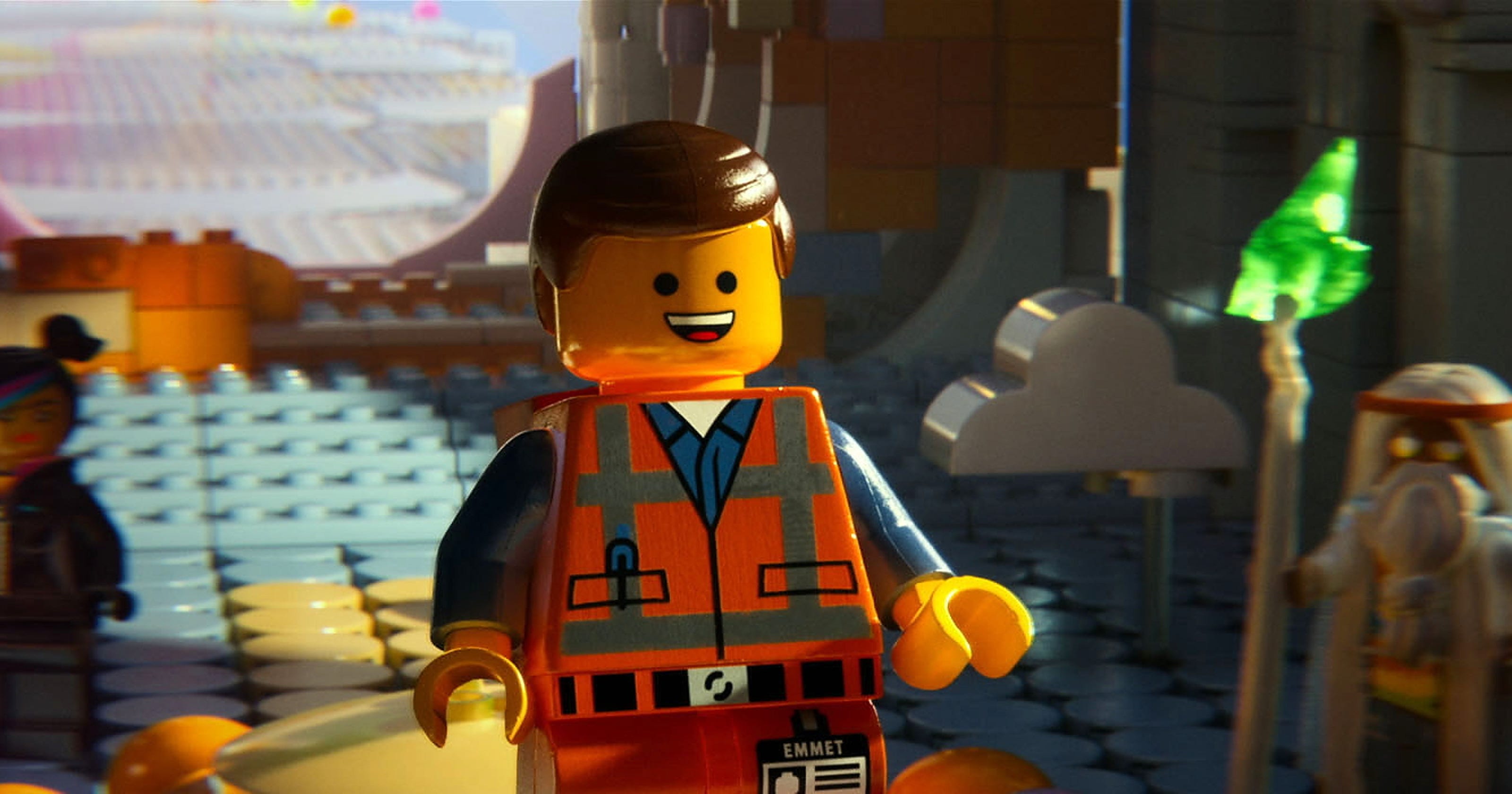
I've 100% settled on a character for my essay now! After careful consideration, I've decided to go with Emmet, the protagonist from The LEGO Movie. This blog post is going to be a documentation of the character themselves; name, appearances, etc.
(The LEGO Movie - dir. Phil Lord and Chris Miller)
NAME: Emmet Brickowski AGE: not applicable FIRST APPEARANCE: The LEGO Movie (2014) VOICE ACTOR: Chris Pratt ALL APPEARANCES:
The LEGO Movie (2014)
The LEGO Batman Movie (cameo, 2017)
The LEGO Movie 2: The Second Part (2019)
EYE COLOUR: Black
HAIR COLOUR: Brown
HEIGHT: ~ 4 cm
WEIGHT: ~ 3 grams
(credit: BrickLink, a frequent LEGO collaborator, LEGO Minifigure parts measurements)
OFFICIAL BIO:
"“Good morning, city!” Every day, Emmet goes to work exactly by the steps in the instructions booklet that he always keeps in his hand. As part of Bricksburg’s busy construction crew, he helps to rebuild the city as briefed by President Business. Emmet wants to be popular, but he struggles to stand out in the crowd. Even his fellow construction workers hardly know he’s there. But all of that is about to change, thanks to a mysterious stranger and a legendary Prophecy about the most special minifigure in the entire world!" ~ LEGO Minifigures: The LEGO Movie series - Hard Hat Emmet (link)
ARCHETYPE: Unlikely Hero PERSONAL LIFE: At the beginning of The LEGO Movie, we're introduced to Emmet through his morning routine. The routine shows us glimpses of what the character enjoys and does. Emmet dedicated himself to following the instructions created by the company in control of his city, Bricksburg. He makes sure to treat everyone and everything he encounters kindly, even going so far as to greet everything in his apartment with a friendly "good morning!" He enjoys everything designated as "popular", including "popular music" and "any chain restaurant". Emmet almost never complains, even when confronted with somewhat ludicrous situations. PROFESSIONAL LIFE: Emmet worked as a construction worker, who specialise in destruction of LEGO buildings, and using large instruction booklets to rebuild the world around them. Emmet's shown not to have had too big of an impact on his coworkers, many of which forgetting who he is. He's shown to be a keen rule follower, and is always happy to help with any demand those around him in the workplace. PRIVATE LIFE: Emmet is never shown to keep anything private, be it thoughts, facts about himself, etc. It's never shown, or even implied, that Emmet ever had any emotions beside contentment for his life. However, as The LEGO Movie progresses, we discover that he develops feelings for Wyldstyle, and eventually comes out with his feelings in a more tense moment between the two.
We looked at iteration in this session. Iteration is the act of repeating a process in order to generate a sequence of outcomes. The aim of iteration is to approach one desired goal, target or result. Each repetition of a set of steps is one iteration, where the result of one iteration directly leads into the start of another. For example using computing terms, iteration is when you have an looped segment of code; if x != 5, x = x + 1 over and over, until x = 5. Iteration applies to character designs, scripts, and characters themselves. Characters don't get just one design and that's final, there are steps and processes the team goes through until they reach the final look.
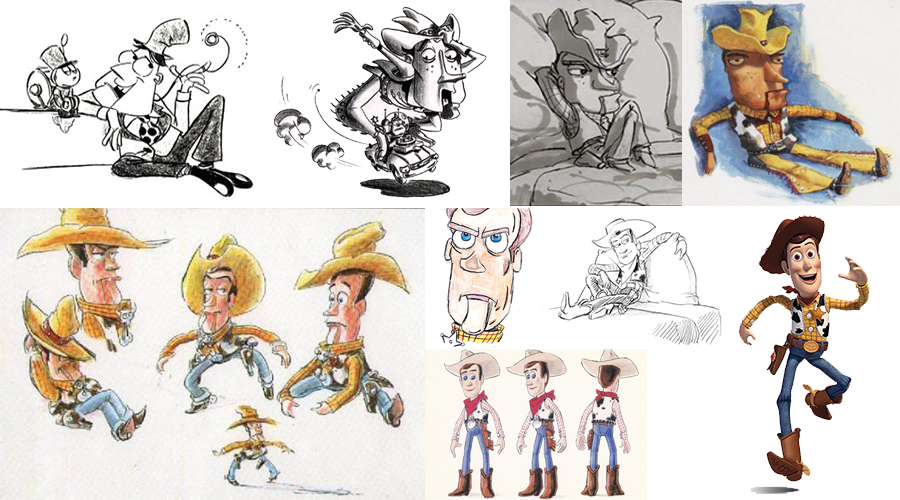
For example, in Toy Story, Woody and Buzz Lightyear looked drastically different to how they turned out in the completed film. Originally, Woody started out as a ventriloquist dummy cowboy, before eventually being toned down into a cowboy ragdoll. Buzz Lightyear also went through some changes, going from a small, 50s-esque spaceman to a taller space marine.
Character motivations and attributes also change through iteration too, depending on if the audience is responding well to the characters or not. Using the Toy Story example again, Woody was originally designed to be a selfish, cruel leader of Andy's toys who resented anything new that came along. Buzz, originally named Tempus from Morph, was even more naive than in the final film, and was too trusting of Woody, whereas final Buzz distrusts Woody if anything.
(Toy Story character test - credit Pixar Animation Studio)
(Toy Story Black Friday Reel - credit Pixar Animation Studios)
Iteration can also apply to the animation tests we've been carrying out in our dynamics sessions! FAILURE. The basic definition of failure is a lack of success. It's the fact of someone or something not succeeding. But it's not something to fear, and we shouldn't have the fear of making our first and worst attempts! We watched a TEDxBYU talk, hosted by Eduardo Zanatta, who talks about failure.
(Failure Is Part Of Success - credit TED on YouTube, Eduardo Zanatta)
We shouldn't let the fear of failure blind us and make us overly cautious when trying the new; it's good to take risks and experiment! We learn most when things go wrong. And even with that in mind, we should TRY and fail sometimes; we can look at them and reflect, see where we can improve and where we've come from! With all that said, the goal of the session was just to improve upon an earlier animation we'd done prior. We could choose a ball bounce, pendulum swing, secondary action, etc. I decided to go with my walk cycle, and try and improve upon it by actually ADDING the second step. Making the frameswas simple enough, just taking the original frames that from the first step, and using them as reference when drawing the same motion with the limbs swapped sides. In total, I did ~8 new frames for the second step; all odd numbered main frames.
In general, I feel like this session went well! The talk about failure and how you shouldn't fear it really spoke to me; I think of myself as overly cautious, and as someone who doesn't take risks. But now that I have the reassurance that failure is ok, and nothing bad will come from it, it really does put my mind more at rest when something does go wrong.
On Wednesday, we had BAFTA nominated animator Robert Morgan come into NUA, and showed us some of his short films he's worked on! Morgan is a stop motion animator, who specialises with specially made puppets and more creepy elements to his films. While we didn't watch his entire filmography, we managed to watch quite a bit of it in the space of 2 hours. The films we watched were The Cat with Hands, The Separation, Bobby Yeah, Invocation, D is for Deloused and Belial's Dream.
THE CAT WITH HANDS
(The Cat with Hands - dir. Robert Morgan)
The Cat with Hands was made for Channel 4, and was released in 2001. Morgan was commissioned to make this stop-motion / live action hybrid by the British television channel Channel 4, originally intended to play in a five minute gap after the 6 o'clock news. However, it was deemed "too scary", and was moved to a ~2 am timeslot. The story recounts a tale that a man was told, as he recites it to an accomplice. He tells of how "he" appeared at the well, before lowering a bucket down into said well. When the bucket rises, we see a boy. He looks in the bucket, and a cat jumps out, landing using two human hands. The boy tries to stroke the cat, only for the cat to grab his hand and steal his face. The cat wears the boy's face as it's own, as we go back to the old man. He says how the cat continued collecting human parts until it looked just like a person, but before he can say the one part it never took, his accomplice kisses the man, stealing his tongue in the process... the accomplice was the cat all along. The film was made for £40,000, and utilised life size puppets. Traditionally, stop motion puppets won't be any taller than 30cm; however, the puppets for the titular cat and the boy are both to scale with what they actually should be. An actress would be the placeholder for the human puppet, acting on it's behalf. Upon watching it, I was immediately uncomfortable. The atmosphere and acting were both superb, especially if it had put me on edge so soon into the film. The puppets, made of a rubber silicon, looked like a disgusting skin texture, which also didn't sit well with me. As it turned out, that would be a continuing trend throughout the short films.
THE SEPARATION
(The Separation - dir. Robert Morgan)
The Separation is a short film directed by Robert Morgan, released in 2003. The story is of two conjoined twins who, once separated and grow old, find themselves miserable in their jobs at a toy factory. One twin yearns to be conjoined once again to his twin brother, and shows this by taking two of the toys produced and sewing them together, in the same way they were once conjoined. The other twin creates a giant sewing machine-esque device, which implies that's how they'd join back together. Where one sits up on the machine, the other slips, causing the machine to start early and mangles his brother's body. We see that the damaged brother no longer has any limbs, and has lost use of every facial feature but his nose. The healthy brother drags him to the hospital, back to the room they were separated in. They lie down together, presumably to die. The short was cut down from it's original cut, seeing that there was originally a sequence that showed the brothers growing up, instead of skipping forward by (at a guess) 50 years. The puppets are made with armatures, little metal skeletons designed for stop motion characters to be built around. Like The Cat with Hands, the puppets are made using a rubber silicon, which Morgan moulded and designed himself. I really didn't like this short film. I really really didn't. It's well made, but the content is so uncomfortable to watch, and paired with the visual style Morgan goes for, I felt somewhat sick while it was playing. Definitely wouldn't watch again if given the choice.
BOBBY YEAH
(Bobby Yeah - dir. Robert Morgan)
Bobby Yeah is an independent stop motion short film by Robert Morgan, which released in 2011. Bobby Yeah revolves around the titular character, who has a fleshy rabbit head, and a ragdoll body. He steals a pet from a house, and presses a red button he finds on the creature. Once he presses the button, the phrase "all hell breaks loose" wouldn't be inaccurate; weird biomechanical creatures appear, shooting seeds(?) all over the place, which form into an egg. The egg hatches, revealing a giant head creature with bug legs. Bobby presses a button on the head creature, leading him to the house he stole from. Confronted by the baby thing that owned the pet, Bobby finds out there was a witness, and the baby gets their father(?) involved. Both Bobby and the face on the wall witness get buttons on them, and the father tries to press Bobby's. Bobby manages to kill both the father and baby, and escapes back to his house. However, the face calls the police to Bobby's house, who try and behead him. Seeing no alternative, he presses his own button, becoming a worm creature with toenail ears. After everyone perishes, Bobby finds an egg. The egg hatches a small insect-like creature, which rips off Bobby's head and sends it skyward bound. The short film is the longest of Morgan's filmography, clocking in at nearly 25 minutes. It was independently made for a budget of £3000, but most of that went into materials and transportation. The most unique part of this film is that it was entirely improvised over 3 years; Morgan explained that he made the character and set, and took it from there. He also stated that, despite what the public theorises, there's no kind of hidden meaning of metaphors in this film. Bobby Yeah was nominated for a total of 13 awards, including the BAFTA for Best Animated Short.
INVOCATION
(Invocation - dir. Robert Morgan)
Invocation is a short film by Robert Morgan, released in 2013. The plot is simple enough; a stop motion animator animates a teddy bear puppet, with an old 12mm camera. However, inside the camera, we see a disgusting fleshy interior. With every press of the camera trigger, a new chunk of flesh is spawned inside the camera, looking more and more like the skeleton and muscles of the teddy bear. Eventually, enough is there for the teddy bear spawn to escape the camera, and crawls out the room. Noticing something out the corner of his eye, the animator turns around, seeing a lifesize horrific version of the bear, with a wide gaping mouth. The bear violently hits the animator multiple times, and delivers a final killing blow with a piece of the stop motion mise-en-scene. With the animator now lying dead on the set, the flesh bear starts animating with his corpse. Going back into the camera, it now creates a twisted version of the animator, who bears witness to his own corpse being animated. Invocation was made in response to Bobby Yeah, where Morgan reportedly felt like Bobby's character was more in control of the animation than he was, telling him what to do, instead of the other way around. This short was also made on a £3000 budget, Morgan remarking that bigger budgets doesn't always necessarily mean a bigger or better product at the end.
BELIAL'S DREAM
(Belial's Dream clip - dir. Robert Morgan)
Belial's Dream is a short film by Robert Morgan, commissioned by the team behind the Blu-Ray rerelease of the film Basketcase. The short revolves around Belial, a character from the original film. He has a very strange dream, in which he meets a creature that tries to seduce him. Once he gets close enough, the creature spins around, revealing a face, with a scalpel on it's nose. Belial screams, and tries to escape. He eventually "wakes up", sitting on their mother's / grandmother's lap. The familial figure tries reading to him, only to be killed by the face. Belial screams once more, before waking up a final time, realising it was all a dream. This short was probably the strangest, given both the nature of the subject and the visuals of the characters themselves. Belial is essentially a worm with a head that have arms sticking out of it, and he looks the most normal in the whole short.
D IS FOR DELOUSED
(D is for Deloused - dir. Robert Morgan)
D is for Deloused was made by Robert Morgan for the film ABCs of Death 2, a collaborative film where 26 filmmakers were assigned a letter of the alphabet, and could make a short film based around a way someone could die, beginning with that letter. Morgan's original letter was L, so he went for "Louse(d)". However, after finishing his film, the filmmakers had their letters changed, so Morgan just changed his title from Louse(d) to Deloused, fitting his newly assigned letter D. The story involves three deformed body snatchers who've tied down a man to an operating table. They inject a pump of sorts into his neck, with a source for the fluid being from a skull. The body snatchers all have nails for noses, and are covered in bugs. One of the men has a louse fall off them, which is then promptly squished. The man dies, and the three men leave. After some time, the louse reemerges as a giant louse, which notices the dead body on the table. As it starts eating the arm of it, a new version of the man spawns from a splat of his blood. However, as the louse eats him, the body part that's gone turns black and shrivels up. He investigates the louse, finding a hatch on it's back side. Looking through, he sees a presumably evil spirit staring back, commanding him to kill. He follows the command, finding and beheading the three men who stole him. He feeds the heads to the spirit, but one gets stuck. He pushes the head in, but gets his own head trapped in the process. He pulls it out just in time, albeit with a now elongated neck. He collapses on the floor, as we see the louse eat his old head. The new head shrivels up and turns black. Finally, the louse returns to normal size, and scurries away. While Morgan expressed happiness for how his self proclaimed "first attempt at full horror" went, he claims ABCs of Death 2, on the whole, isn't very good. In conclusion, I found the visit fairly interesting! Stop motion isn't a form of animation I find myself to be particularly invested in, but seeing Morgan's films really pushed forward what I perceived as doable in stop motion. The films themselves, however, were hit and miss for me. Bobby Yeah and Invocation were interesting watches which I wouldn't mind watching again, but The Separation is one I'm going to try and avoid at all costs from now on. The way I'd describe watching his films in as few words as possible is "uncomfortable laughter".
Today's session involved looking at broader genres of characters; namely, the character archetypes we see in stories.
"We are unique and universal" ~ Christopher Vogler
That quote from the author of "The Writer's Journey" applies to not just real people, but to fictional characters as well. Being unique is one thing, but the universal aspect is important. It essentially means that characters have to fit into a somewhat broader mould to be identifiable to the audience. They need relatable qualities, characteristics, personalities... They need to fit an archetype.
Archetype - In Greek, it's roughly translated to "First Moulded of a Copy"; the blueprints for more like it. In computer science terms, it's like a class.
It's been suggested that every story has the same handful of archetypes in them, along with the same essential core for the story. Joseph Campbell, and American professor of literature, wrote the book "The Hero with a Thousand Faces", after studying myths and legends from across the world. While they all varied in terms of specific events and characters, Campbell found that they all shared the same skeleton for plot structure and characters. This would later go on to be known by The Hero's Journey (or The Mono-Myth, depending on who you ask.)
(credit: TED-Ed and Matthew Winkler on YouTube)
(credit: Glove and Boots on YouTube)
Vogler built more upon this theory, claiming that to make a well rounded character, they should "manifest a touch of every archetype".
There are 8 archetypes according to both the Mono-Myth and Vogler. Presented with their Vogler assigned titles, here are the 8 archetypes. For my examples, I'll be using Toy Story 3, Avengers: Infinity War and Star Wars Episode IV: A New Hope.
HERO
The hero is typically the protagonist of the story. They're courageous, resilient, selfless, as well as other personal traits. But they're also the characters that ultimately come face to face with death, and receive the most change and growth. They're also the most active part of the story, in the sense of they're the ones doing most of the things.
They're our window into the story, and are usually a mix of both universal and unique traits. They can enter the story either willingly or unwillingly, but either way, end up in the same end point regardless of their entrance.
Heroes who are active and contribute to the plot are more engaging than those who simply react to what happens around them.
But most importantly, they need a motivation. Why are they leaving their cruel home for wizard school? Why are they hopping in a spaceship to blow up the Death Star? They need drive.
There are different types of heroes that fit into this mould. To give examples, there's the unlikely hero: a nobody who, through heroic means, becomes a successful somebody (for example, Emmet of The LEGO Movie or Shrek from Shrek). The anti-hero; a deeply flawed protagonist, who often toes the line between hero and villian (e.g. Venom from Venom, Red Hood from Batman comics).
Catalyst heroes are also important in the scale of it all; they're heroes who appear multiple times in different points in a franchise or series, and so overall have to remain somewhat the same. They're going to change every so often, but most of the time they change their surroundings, but not themselves.
Toy Story 3 has a hero in Sheriff Woody. He's seen as the leader of the group of Andy's toys, and is said to be "kind, smart and brave". He thinks of others before himself, and is willing to sacrifice himself where he can. When the group are threatened by the shadow of the film and his henchmen, Woody confronts him when no-one else would.
(Toy Story 3 - dir. Lee Unkrich)
Avengers: Infinity War has Tony Stark, aka Iron Man, as it's hero. Tony would identify as a catalyst hero; this is his 8th appearance in the ever-growing Marvel Cinematic Universe, yet the bulk of his change came from his 1st and 6th appearances, in Iron Man and Captain America: Civil War, respectively. While his self proclamation of being a "genius, billionaire, playboy, philanthropist" remains true, over the course of the MCU, he's gone from a selfish recluse who profited off of death, to a selfless guardian who protects life at all costs. Even in Infinity War, he's one of the last lines of defence against the most powerful being in the universe.
(Avengers: Infinity War - dir. Joe and Anthony Russo)
Star Wars: A New Hope's hero is Luke Skywalker. Luke follows the hero's journey to a tee, and we can read him incredibly clearly. Going from frustrated farmboy to galactic hero, he can be seen as an impatient, practical, somewhat untrusting boy at the beginning. However, the events of the film show his development into a more trusting character, who's more open to try new solutions to problems.
(Star Wars Episode IV: A New Hope - dir. George Lucas)
SHADOW
The Shadow, or "Villain", is the embodiment of the dark side. It's been said that a hero is only as good as their villain, but sometimes it doesn't even need to be another being entirely; it could reside inside the hero themselves. The shadow threatens the hero, and forces them to rise to the challenge. They create conflict, and bring out the best of the hero. Sometimes, it can be revealed that the shadow is just the hero who made bad choices.
"What is your character good at and comfortable with? Throw the polar opposite at them. Challenge them." ~ Pixar's 22 Rules of Storytelling, Rule #6
The antagonists need motivation as much as the hero does, and depending on the narrative, the motivation could be more justified or morally greater than the hero's. Even finding out a character's backstory can help the audience back them up in what they're doing, or start doubting another character's actions. This can lead to many different scenarios... even one where the audience is rooting for the shadow to win. Toy Story 3's shadow is Lotso, a teddy bear who's in charge of the daycare center Andy's toys are mistakenly sent to. Where the first two Toy Story films show the positive outcome of when the characters are thrown into a fish out of water situation, Lotso embodies the negative. He was lost by his owner, and upon finding Sunnyside, he took his anger out by morphing a hierarchy with himself at the top.
(Toy Story 3 - dir. Lee Unkrich)
Avengers: Infinity War has Thanos as it's villain. Thanos isn't designed as an anti-thesis to any particular superhero; he's his own character, with his own goals. Believing the universe can't sustain life at the rate it's increasing, he plans on assembling six Infinity Stones (each stone controlling a vital aspect of existence) in a gauntlet, and wiping out half of all life. The audience, once presented with his beliefs, backstory, and willingness to achieve his goal, are left with the question of whether Thanos is right or not. He's even been considered by some to be the hero of the film, supported by how much we discover about him, and how he's the essential driving force of the film.
(Avengers: Infinity War - dir. Joe and Anthony Russo)
Darth Vader serves as the shadow for A New Hope. Vader is revealed to be the type of shadow where he had the same start as Luke did, but ended up making bad choices, leading him to the Dark Side of the Force, and becoming the very thing he swore to destroy. He's got an almost monotone, robotic voice, which asserts his dominance over the people he talks to. Vader, one of the higher ups of the Empire, seeks more power than he already has.
(Star Wars Episode IV: A New Hope - dir. George Lucas)
SHAPESHIFTER
The shapeshifter is a character who can change appearance / mood throughout the course of the story. They can also switch between archetypes as well; an ally could become a shadow, a threshold guardian to a mentor, etc. They're often unpredictable, so the audience is given reason to not trust them, creating an air of doubt and suspense. Shapeshifters are usually aware of their status, and may use it to confuse or seduce the hero. Toy Story 3 has Ken as it's primary shapeshifter. When we're first introduced to him, he's a suave, somewhat campy doll and Lotso's right hand man. But when Sunnyside's dark side is revealed, Ken also shows his true colours as a more menacing, untrustworthy toy. He changes once more, after being captured by Barbie and seeing the errors of his ways, and becomes an ally to Andy's toys.
(Toy Story 3 - dir. Lee Unkrich)
The shapeshifter of Infinity War is Loki. While his time in the film is short, he manages to get a full shapeshifter arc. Starting off, he seems to support Thanos is trying to get the Infinity Stone the Asgardians have. However, after Thanos harmed Thor, Loki switched sides, and tried to kill Thanos, trying to trick him by pretending to be on his side. This doesn't work, and Loki's left with a broken neck.
(Avengers: Infinity War - dir. Joe and Anthony Russo)
A New Hope has Han Solo as it's shapeshifter. Han is first presented to be a business kind of guy; he does the job he was paid for, and then moves on. And he even goes that far; as soon as he gets Luke to and from the Death Star, he decides to leave the heroes when they go back to attack the station. However, he seems to have a change of heart, helping Luke out when it comes to the attack on the Death Star.
(Star Wars Episode IV: A New Hope - dir. George Lucas)
MENTOR
The mentor is a teacher or trainer to the hero, and represents either humanity's better self, or the hero's. They're seen as the moral compass of the film, and determines what's good and what's bad. A nickname this archetype has is the "wise old man", due to the frequency of mentors fitting that physical description (Dumbledore, Gandalf, Obi-Wan, etc.) A New Hope is the only one of the three films which really has a mentor figure, in the aforementioned Obi-Wan Kenobi. Initially known as an old crazy man on the outskirts of Tatooine, Luke learns the true fate of his father through Obi-Wan. And after Luke's aunt and uncle are murdered, it's Obi-Wan who convinces him to come defeat the Empire, and teaches Luke the ways of the Force. In that sense, Obi-Wan Kenobi is both a mentor and a herald, given that he takes on aspects of both.
(Star Wars Episode IV: A New Hope - dir. George Lucas)
HERALD
The herald is the call to adventure for the protagonist. This is an example of an archetype that doesn't necessarily have to be a being. It can be an event too. The herald represents the inner understanding of the need for change, and gives the hero motivation to set out on their quest. The herald may issue a warning, and the hero may be afraid of the challenges presented. But ultimately, they accept and start on their journey. Toy Story 3's herald is an event, when Andy's toys get donated to Sunnyside accidentally. This event leads to two different journeys, through how characters see the event. Woody sees the accidental donation as the start of his quest to get back home, since he believes that they all belong with Andy. However, Buzz Lightyear and the other toys decide that they should stay at Sunnyside, and live the life they've missed for years.
(Toy Story 3 - dir. Lee Unkrich)
Avengers: Infinity War's herald is both a person and an event. Bruce Banner, aka The Incredible Hulk, crashes into Doctor Strange's sanctum after witnessing Thanos with an Infinity Stone, and learning of his plan to get more. When reunited with Tony Stark, he presents the quest Thanos is on, and how they need to counter that by stopping him. The event itself is, simply enough, Thanos retrieving the six Infinity Stones.
(Avengers: Infinity War - dir. Joe and Anthony Russo)
A New Hope is another example where the herald is both an event and a person. After meeting Obi-Wan Kenobi, Luke realises he's made a mistake by purchasing two droids the Empire was after, tracing them back to his aunt's and uncle's house. Luke gets back, but by that time, it's too late. The Empire burned down the house, leaving his aunt and uncle as charred skeletons. Luke realises that the Empire just made things personal. Obi-Wan Kenobi walks up to him, and offers Luke the opportunity to go and get some revenge.
(Star Wars Episode IV: A New Hope - dir. George Lucas)
THRESHOLD GUARDIAN(S)
The threshold guardians are essentially mini-bosses. They're smaller threats than the main shadow, yet still present some form of threat to the hero. The hero has to prove their worth by vanquishing them, or redeeming them in some cases. They're usually henchmen, guards or thugs, but they're meant to represent the ordinary obstacles in life. In Toy Story 3, there are a range of threshold guardians in the form of Lotso's gang. The gang starts off with a range of different toys who are found in the same room as Lotso, but eventually they manage to turn Buzz to their side, who then takes on the role of a threshold guardian. By the end of the film, Lotso's original henchmen are redeemed, and Buzz is returned back to normal.
(Toy Story 3 - dir. Lee Unkrich)
Avengers: Infinity War presents four different threshold guardians, with Thanos' Black Order. The Order is comprised of four of Thanos' adoptive children: Ebony Maw, Proxima Midnight, Corvus Glaive and Cull Obsidian. They're usually seen in pairs, and get picked off one by one. Ebony Maw and Cull Obsidian appear in the first act, trying to retrieve the Time Stone from Doctor Strange, where Proxima Midnight and Corvus Glaive try and get the Mind Stone from Vision. They're all eventually outsmarted and killed, through various means.
(Avengers: Infinity War - dir. Joe and Anthony Russo)
A New Hope's threshold guardians are, arguably, the most recongisable henchmen of all time... Stormtroopers. Stormtroopers are the soldiers of the Empire, who are sent to do menial tasks that Darth Vader and the Grand Moffs wouldn't do themselves. Luke and his band of allies run into them often over the course of the story; as a checkup when driving to Mos Eisley, when the Millenium Falcon gets a check on the Death Star, etc. Stormtroopers are infamous for being incompetent as soldiers, to the point where only once in the original trilogy did a Stormtrooper actually hit their target.
(Star Wars Episode IV: A New Hope - dir. George Lucas)
TRICKSTER
The trickster is the type of character who revels in the fun side of the plot. This can be through being a comic relief, or continually breaking the rules of what should be done. They can be a catalyst character, and not have very much development over the film. They keep the hero's ego in check, and brings them down to Earth when necessary. Most of the time, they're a sidekick of some kind, and end up being one of, if not the most popular part of the film. In Toy Story 3, we have Spanish Buzz Lightyear as the trickster. This is a character who falls more into "comic relief" than "rule breaker". Trying to reset evil Buzz back to normal, Woody and co. accidentally turn him Spanish. He has no memory of anything, acting very much like he did in the first Toy Story. His naivety and cluelessness makes for some funny dialogue, which get the bigger laughs out of an audience.
(Toy Story 3 - dir. Lee Unkrich)
Infinity War has quite a few comic relief tricksters; most notably, the Guardians of the Galaxy and Spider-Man. The Guardians had two films prior to this one, both of which were fairly comedy centric. Spider-Man has always been written as a comedic character, delivering quips and one-liners where he can. Both parties meeting manages to get some great jokes delivered, and in my experience seeing the film in the cinema, the delivery of "Why is Gamora?" got the biggest laugh of the whole film.
(Avengers: Infinty War - dir. Joe and Anthony Russo)
A New Hope has Han Solo as it's trickster. While also playing the shapeshifter, Han revels in joking around with anyone within his vicinity, and even cracks jokes when he's in tense situations. Whether someone's trying to shoot him, or he's confronted by the mob boss of the Star Wars universe, he's always trying to keep the mood light.
(Star Wars Episode IV: A New Hope - dir. George Lucas)
ALLY
Finally, there's the Ally. An ally is another character who joins the hero on their journey. Often, there'll be multiple allies accompanying the hero, and they're able to temporarily play other roles. In Toy Story 3, the rest of Andy's toys are the allies to Woody. When Woody leaves Sunnyside, they change allegiance to be allies to their second-in-command, Buzz Lightyear. The toys help out where they can, often serving as separate cogs to make one big machine turn. Buzz Lightyear is Woody's main ally, a Space Ranger action figure who takes rational courses of action, and isn't afraid to get into a scrap. Jessie the cowgirl is a nervous, yet outgoing ragdoll who often jumps into things headfirst. Rex and Slinky Dog are both friendly souls, who look to Woody for guidance in most things. There's also Mr. and Mrs. Potato Head, who both exist in a state of "always kind of irritated".
(Toy Story 3 - dir. Lee Unkrich)
Avengers: Infinity War has a LOT of allies. Considering the main three characters are Iron Man, Thor and Thanos, that leaves us with over 30 allies. By the end, both Tony and Thor have a team of allies. On Titan, Tony has Spider-Man, Doctor Strange, Star-Lord, Drax and Mantis. Thor on Nidavellir has Rocket Raccoon, Groot and Eitri, but later when he enters Wakanda, he gets Captain America, Black Panther, Black Widow, and War Machine, amongst others. Due to all the allies having different abilites and powers, they're able to contribute to the plot and fights in a major way.
(Avengers: Infinity War - dir. Joe and Anthony Russo)
Finally, A New Hope has a handful of allies joining Luke on his journey. While there's the aforementioned Han Solo and Obi-Wan Kenobi, there's 4 other allies too. Princess Leia is one of them, the princess of Alderaan, who's headstrong, independent, and a natural born leader. She's rescued from the Imperial prison by Luke when they storm the Death Star, and later on she helps co-ordinate the attack on the Death Star. Chewbacca is Han's co-pilot and best friend, who's from the species known as Wookies. He's best described as a gentle giant, who only gets violent when absolutely necessary. The final two characters are C-3PO and R2-D2, two droids Luke buys from the Jawas. C-3PO is a nervous, cautious protocol droid, where R2-D2 is a more confident, selfish astromech droid.
(Star Wars Episode IV: A New Hope - dir. George Lucas)
So those are all the different archetypes that Campbell outlines in the mono-myth theory, with the titles given to them by Vogler. Once we looked at all the archetypes, we were advised to try and find what archetype our chosen character fits into. For Emmet (The LEGO Movie), I feel like he'd fit into Hero. More specifically, the Unlikely Hero. Given his life seen at the beginning of the film, he shows absolutely no qualities of being a hero. However, through lessons and teachings from his mentor (Vitruvius) and herald (Wyldstyle), he becomes the hero he never thought he'd be.
Today's session focused on the traditional walk cycle. In animation, a walk cycle is created to give animators a sense of the character in movement, as they walk on the spot.
(credit: Richard Williams, "The Animator's Survival Kit")
Our tutor for the day showed us a premade set of frames in Photoshop, and demonstrated what each type of frame was for.
First, there's the contact frame (see frames 1, 9 and 17 of above image). These are the positions when the feet will be furthest apart from each other. It's also when a foot which previously was airborne first hits the ground.
In between contacts is passing positions(see frames 5 and 13). These are the motions inbetween two extremes, or in this case, contact frames. In walk cycles, it usually involves one straightened out leg in full contact with the ground, and one raised, lightly bent leg.
Alternating in between contacts and passing positions are the highs and lows (see frames 3 & 11 for lows, and frames 7 & 15 for highs). These are when the whole body moves down or up in accordance to what the legs are doing. When legs are both bent down, the body moves downward accordingly, as does moving up when the legs are more straightened out.
And then filling in the gaps are the inbetweens(every even numbered frame). These are, simply enough, meant to fill in the gaps between the two frames it's sandwiched between to make the movement smoother and more convincing.
When we were first presented with this task, I won't deny, I found it a bit daunting. While I've tried walk cycles before, they weren't necessarily great. They staggered and gave a very rough feel, and I worried my previous inexperience would hinder this attempt. Even when drawing out each frame, with a reliable reference on the screen at the front, I felt like when I line tested, it would turn out bad and I'd have to try again.
As mentioned, I followed along with the guide at the front. While I needed the reference for the contacts, passings and highs & lows, I felt confident enough with the inbetweens to do them myself. I would occasionally flick through my drawings, trying to get some semblance of just what it would look like in motion, I couldn't get a good idea of it.
Eventually, I managed to line test and I was extremely happy with the results! Where I had worried that the animation would look bad while drawing the frames, putting them all together brought out a smooth, convincing walk cycle!
Upon presenting it to the tutor to get some feedback, I was told it was a good cycle. The only feedback I got was the head seemed to get a little bit of a double bounce on the high, but that was due to my more rough linework and the tutor, as they put it, "being nitpicky". Once the main walk cycle was complete, we moved onto getting the arms to move. We were only really given the first contact position to work with, alongside being advised that it's the same basic principle as the legs when it comes to how to position the other frames. I was much more confident with this step, since I have a better idea of how arms work than legs. I decided to offset the arms by one frame; for example, where the extreme for the legs would be frame 1, the arms' extreme would be frame 2. I figured this would make a less robotic movement, since it doesn't look like a deliberate effort to move both arms and legs at the same time. I'm happy with how the arm animation turned out, having the figure seem like they're doing a "happy march", for lack of a better term.
I think that so far, this has been my favourite of the animation tutorials we've been through! This is where we crossed the threshold into the more character driven animation, which is the stuff I find exciting and fun to make! There are things I would've done differently for this session, however. I think gaining a better understanding of how legs work and go together is essential... perhaps life drawing or studying up on it will help most. Or it could be as simple as observation!
The next step to take the walk cycle is, quite literally, step 2. I need to follow through on making a fully looping walk cycle, instead of looping the same single step. While repeating the one step gives the illusion of a full cycle, the legs changing colours (used while animating to remind myself which leg is which) takes away from that.